
New publication: Environmental and Protection Effects of Shark-Companion Associations Across Three Ocean Basins
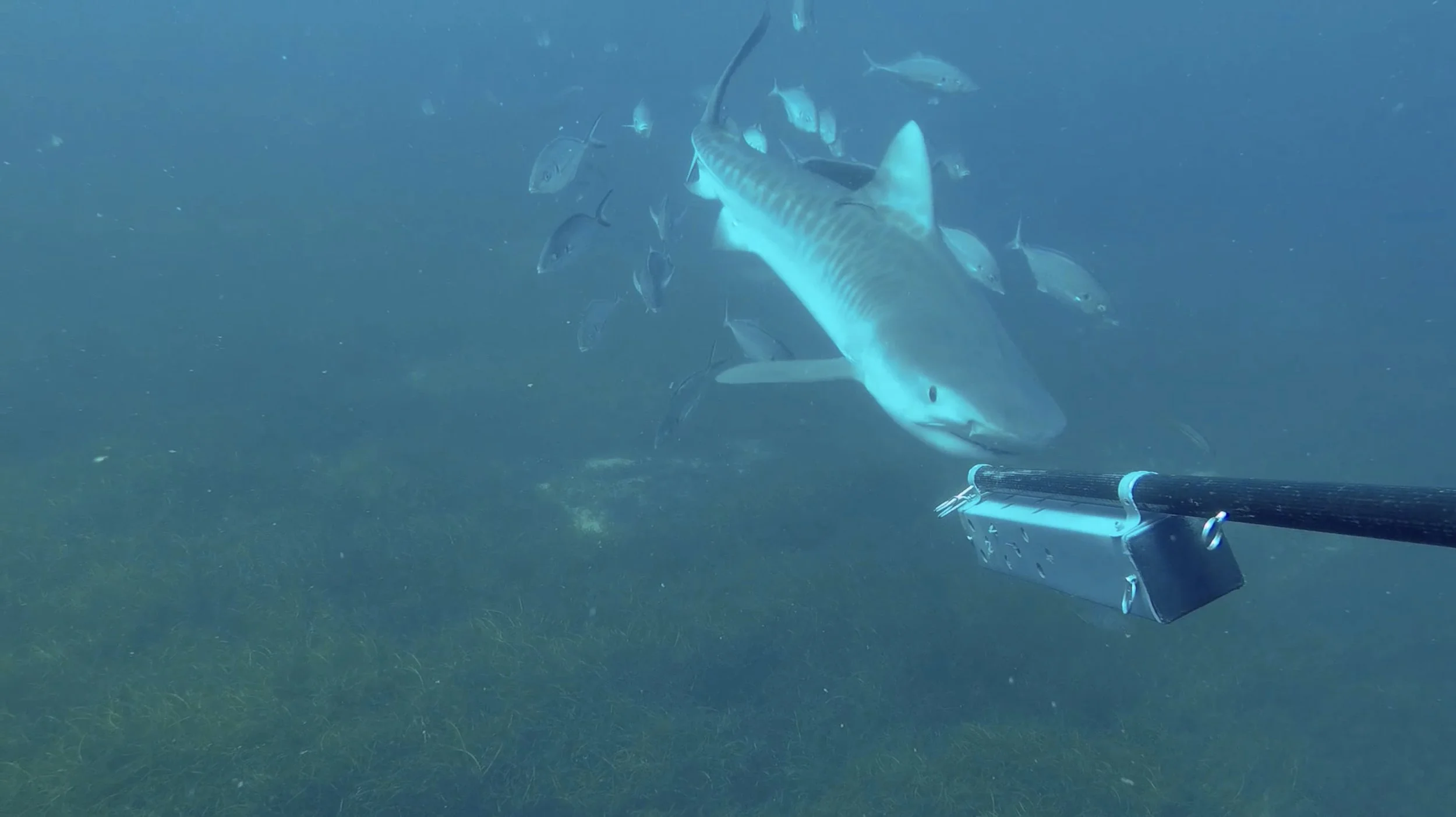
Credit: Marine Futures Lab
Our paper published in Ecology and Evolution, “Environmental and Protection Effects of Shark–Companion Associations Across Three Ocean Basins”, uses a global dataset of midwater Baited Remote Underwater Video Systems (BRUVS) to investigate the relationships between sharks and the smaller fish “companions” that travel with them across the Atlantic, Indian, and Pacific Oceans. These companion species, which include remoras, pilotfish, and trevallies, often remain close to sharks for extended periods, gaining benefits such as protection from predators, access to food, and transport through the open ocean. Yet, despite widespread declines in shark populations worldwide, very little is known about how these declines may affect the species that depend on them. Understanding these relationships is important because the loss of one species can trigger declines in others, accelerating biodiversity loss across marine ecosystems.
Our study found that almost half of all sharks observed, hosted one or more companion species, including remoras, pilotfish, and trevallies. These associations were structured, with some companions showing strong preferences for particular shark species. Environmental conditions such as temperature, salinity, productivity, and wind patterns were important predictors of where these relationships occurred, suggesting that climate-driven ocean change could disrupt long-established ecological partnerships. We also found that marine protected areas influence these associations, with highly protected reserves supporting greater numbers of companions when they were present. These findings highlight that conserving sharks protects more than a single species; it may also safeguard the ecological connections that support biodiversity and ecosystem function in the open ocean.